The early years of the 1940s were hard on the US film industry, partly due to a loss of foreign markets during WW2. But a quick rebound followed, fueled by dark, morally
ambiguous Film Noir films such as Key Largo (1948), low-budget B-movies like Chained for Life (1952), and romantic comedies like Sabrina (1954).
The 1950s produced a wide variety of films. Alfred Hitchcock was making some of his most iconic films, and actors John Wayne, Marilyn Monroe, and Marlon Brando were at the peak of their popularity. The 1950s also saw a rise in car ownership, which was reflected in many films with cars prominently featured.
Throughout the late 1940s and 1950s, the “red scare” swept through Hollywood, banning suspected Communists from working in the industry.
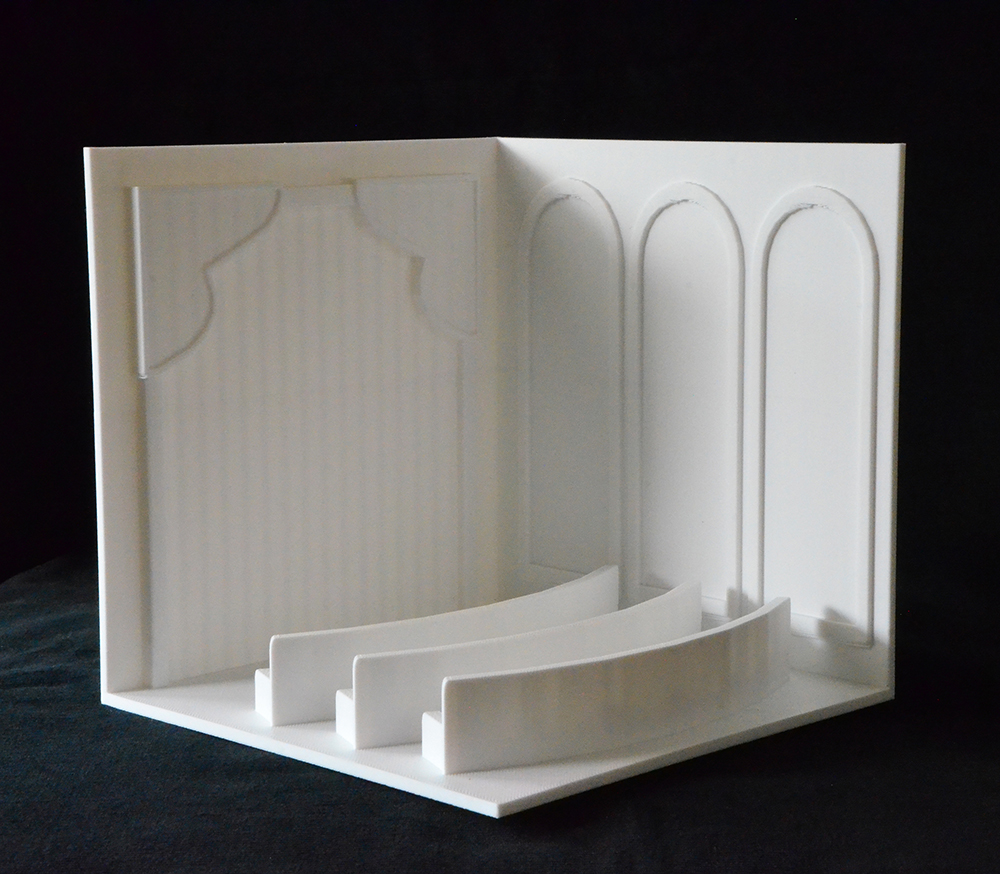
About the model, The Movie Palace
×
The huge success of the Nickelodeon had enabled the film industry to build movie palaces - large, elaborately-decorated theaters with high ceilings, plush carpeting, and comfortable seats. A highly-decorated proscenium housed the movie screen, dramatically revealed by the parting of lush curtains. These beautiful, ornate spaces transformed the experience of moviegoers.
Movie palaces were built starting in the mid-1920s, but their decline began in the 1950s. The El Capitan Theatre in Los Angeles, which opened in 1926, is still in use today.